
PlateMate
An Al-powered companion that provides dietary guidance based on users’ unique needs and health goals.
Role
Research, Product Design, UX/UI Design, Wireframing, User Testing, Prototyping,
Design System, Branding
Timeline
Fall 2025 - 12 Weeks
Tools
Figma, Figma Make, Illustrator, Miro

Context
Project Brief
Develop a digital product centered on automation, focusing on how AI could simplify actions for users.
The Problem
Individuals with different dietary needs, restrictions, health conditions, or lifestyle goals struggle to find tailored nutrition guidance.

Research & Discovery
Statistics & Facts
Statistics reveal that there are high rates of diet failure and struggles to meet nutritional requirements across North America. Food allergies affect approximately 220 million people worldwide and in Canada there is a large and growing market for food allergic consumers.

Benchmark Analysis
We explored existing health and nutrition apps to identify gaps and opportunities for innovation. By comparing features, interfaces, and user experiences, it helped us determine where Platemate could stand out through its AI-driven personalization and approach to tracking meals.


PACT Analysis
Through a PACT analysis, we examined People, Activities, Contexts, and Technology to plan how users would interact with PlateMate. It helped to identify user needs, define key tasks such as meal logging and recipe generation, and evaluate the environments where the app would be used.

User Research
User Interviews
Our research highlighted the importance of accessible personal dietary guidance. I further conducted interviews with 6 individuals, 3 young adults, and 2 adults to identify pain points and behaviours. I came up with the following questions to ask participants.

Affinity Mapping
After gathering user insights, I organized my data through affinity mapping to discover common themes. Through this method, I formed 5 main themes.

Solution
PlateMate
An AI-powered mobile companion that provides dietary guidance based on users’ unique needs and goals.
Key Features

User Modelling
System Map
The structure of the app was developed based on its key features. The user first goes through the onboarding process to set up a profile based on dietary needs or health goals and can edit this information any time through their profile. The pages in the navigation bar include the scanner, recipes, food log, and health log.

User Personas
The user personas represent the target audience for PlateMate, highlighting their pain points, needs, and goals. Defining personas informed the design of the product’s features to ensure they are intuitive and address real user challenges.


Visual Research
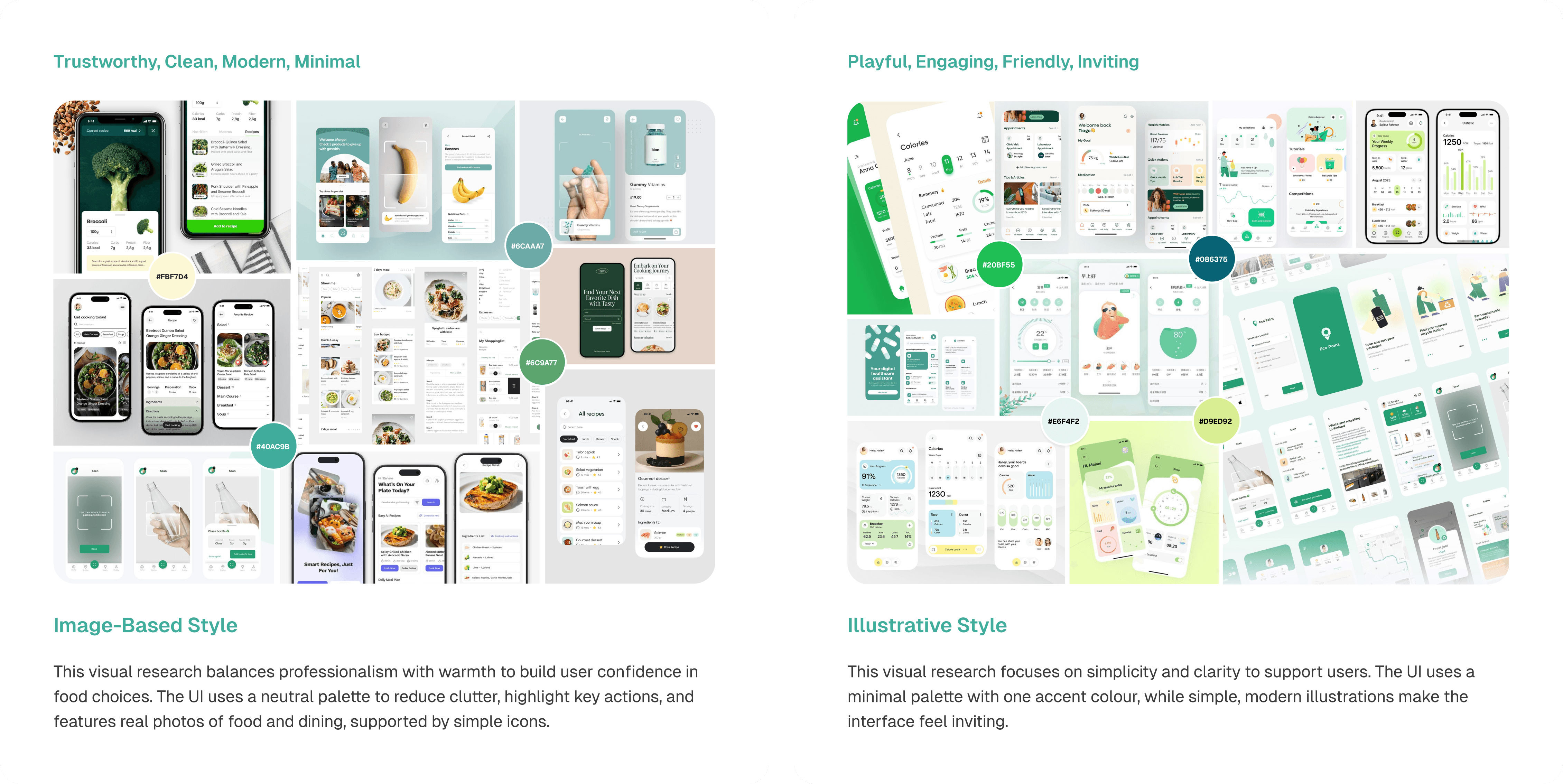
Mood Boards
Creating mood boards helped to inspire a clean and approachable visual style for the app.
Wireframes
Low and High-Fidelity Wireframes
I was responsible for designing the low and high-fidelity wireframes for the scanner feature which allows users to scan meals, products, or restaurant menus to determine how foods align with their diet.


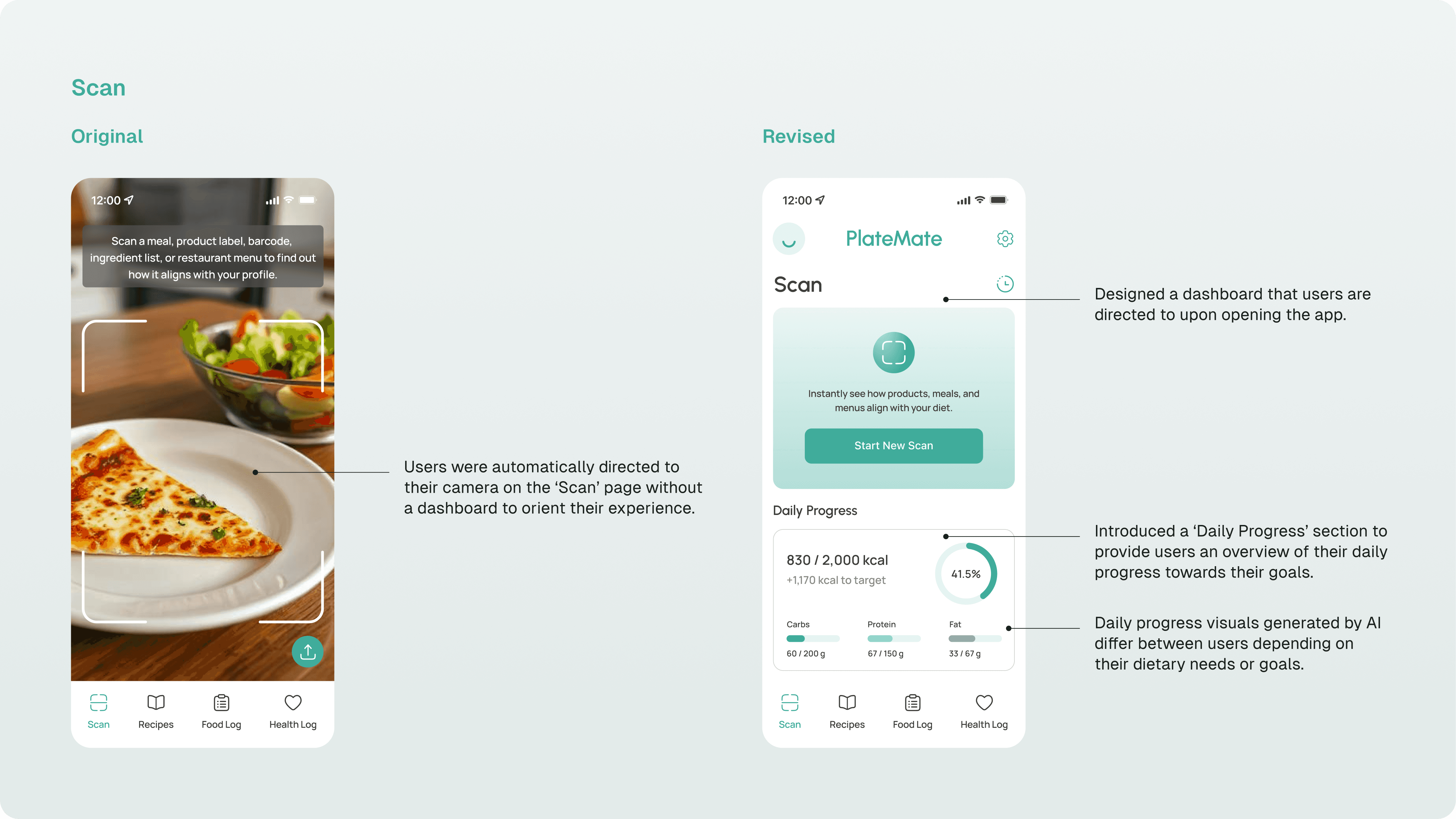
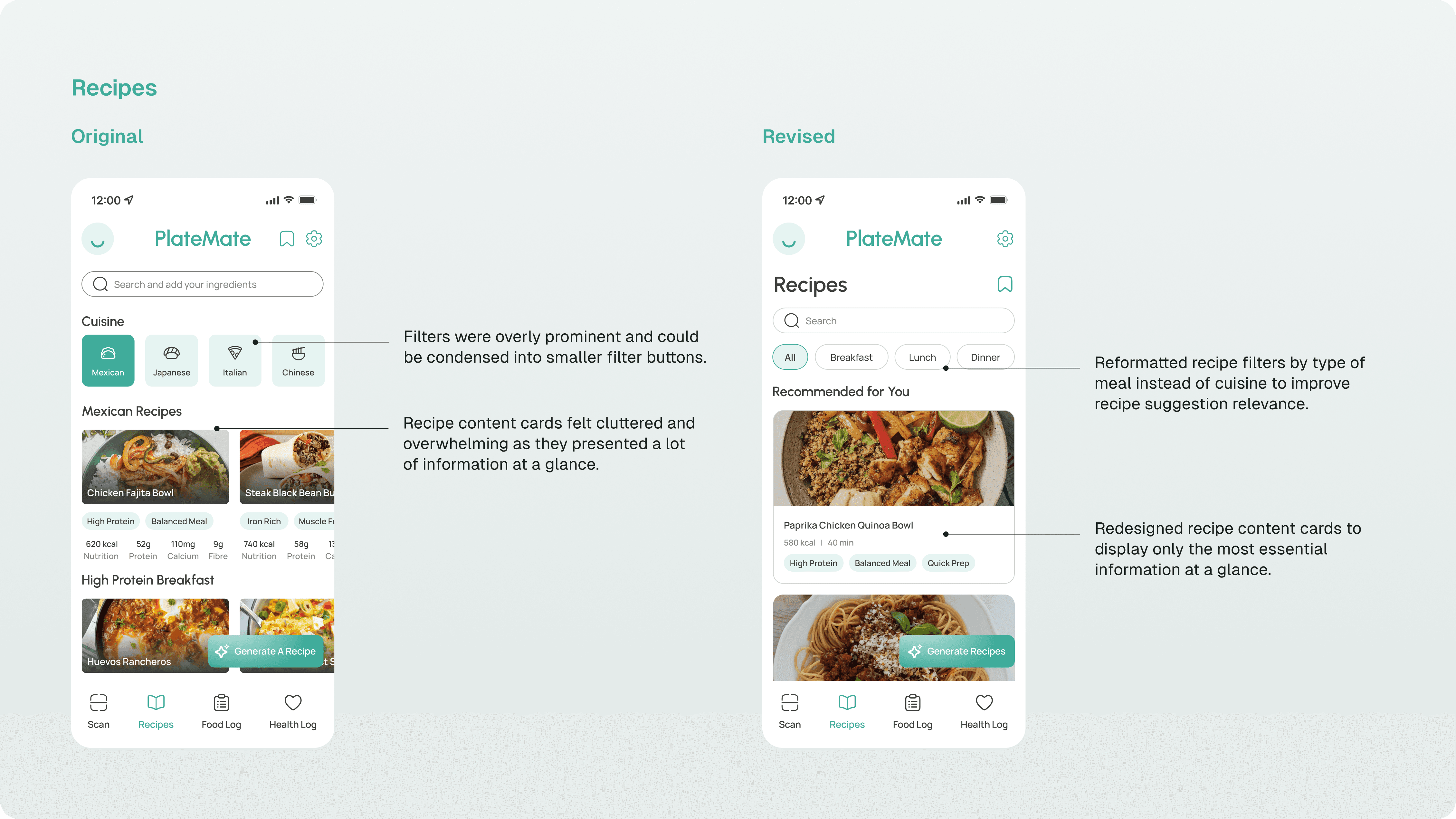
Testing & Refinements
I conducted user tests with 6 users to improve and refine the app design. Highlighted below are some of the key improvements I made based on the user feedback collected.

Prototype

Scan Products, Meals, and Menus
Instantly scan packaged foods, meals, or restaurant menus to assess dietary compatibility and access detailed nutrition breakdowns. PlateMate will also automatically suggest alternatives for meals, products, or menu dishes that may better align with users diets.

Track Meals and Health Goals
Seamlessly record daily meals in the food log to track nutritional intake
and progress towards health goals. Through the health log, PlateMate helps visualize trends and keeps users accountable to their health or fitness objectives.
Generate Personalized Recipes
Chat with PlateMate using text or voice to generate custom recipes tailored to dietary needs. The AI-driven assistant ensures every meal fits users’ unique needs. Users even have the option to scan the ingredients they have on hand to generate recipes that incorporate them.

Design System
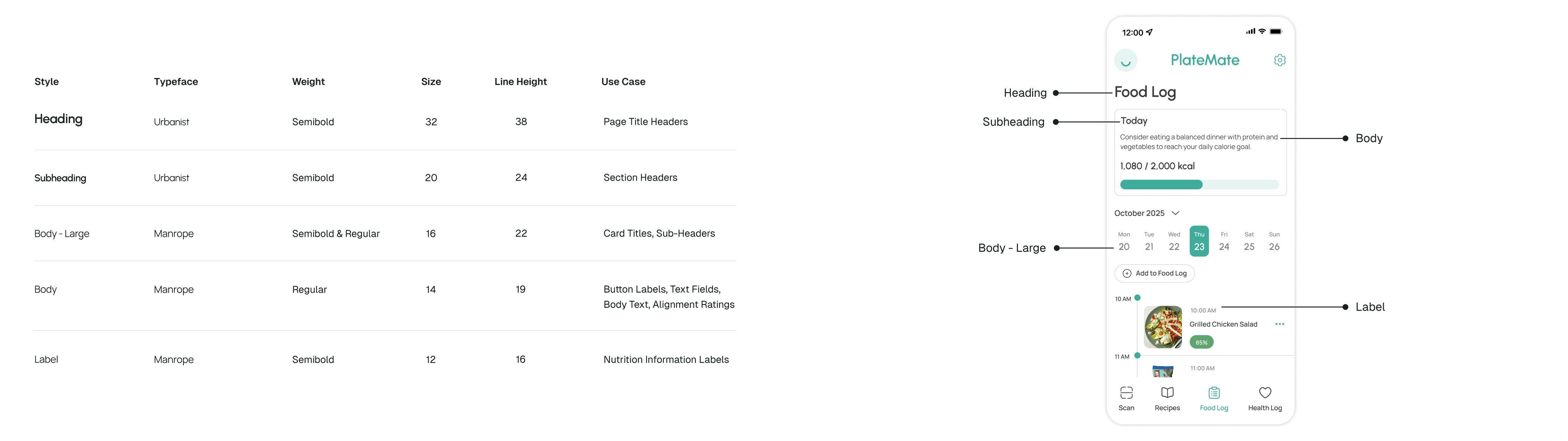
Typography
Clear typography guidelines are applied consistently throughout the app design.
Colours
The colour palette reflects the platform’s branding to reinforce a sense of trust and safety. Accent colours are incorporated for the percentage ratings that inform users how well food products and meals align with their diets.

Iconography
A streamlined set of icons are used throughout the app to ensure a unified and professional style.

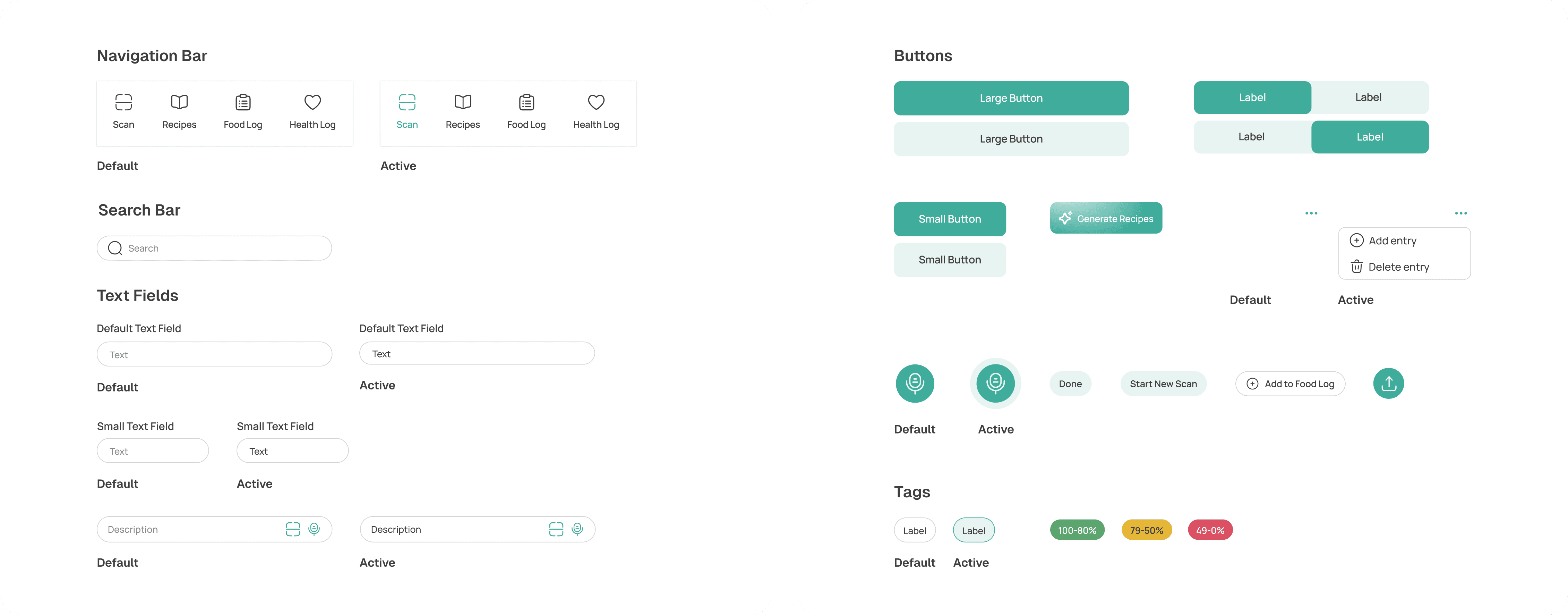
Components
Reusable components for navigation, text fields, buttons, tags, and content cards were established for consistency across the app design.
Key Takeaways
AI-Driven Design
I learned how to design intuitive and trustworthy AI interactions that personalize experiences while keeping users in control. Designing PlateMate’s scanner and recipe generator deepened my understanding of how AI can reduce friction in health tracking and meal planning while still giving users transparency and control over AI-generated recommendations.
Next Project
Let’s Connect!
© 2026 Samantha Mirabella - Made with love
Resume
Designing for Complex Needs
I learned how to simplify complex user needs into intuitive experiences. PlateMate required us to account for different dietary restrictions, health goals, and meal-planning needs while keeping the experience approachable. This taught me to prioritize information and design flexible experiences that adapt to different users without overwhelming them.